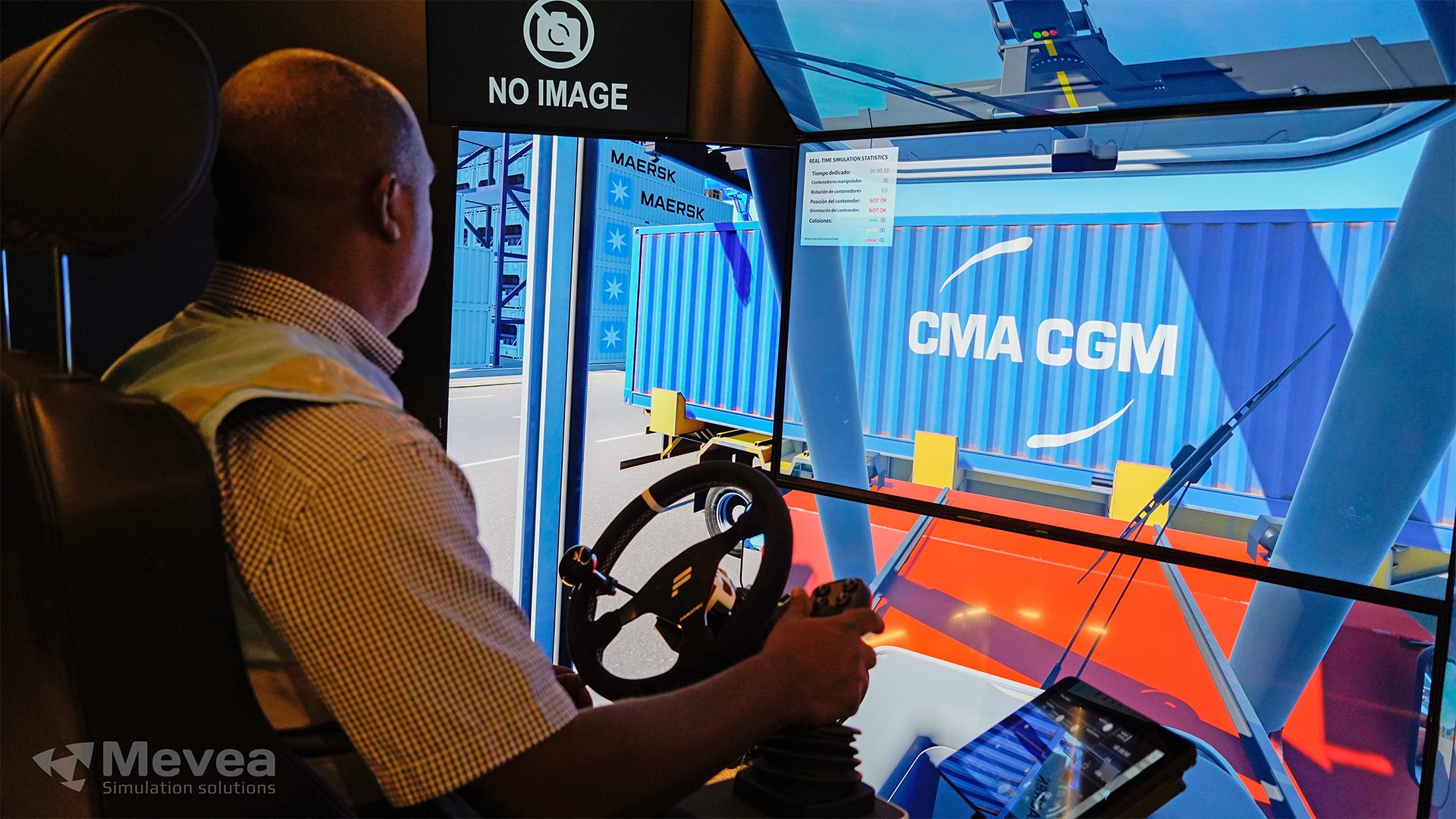
Every physical prototype you build costs hundreds of thousands of euros and weeks of engineering time. And when the design needs to change, the cycle starts over.
If your product development team is still relying on physical test machines to validate new designs, you are not just spending more money than you need to. You are losing ground to competitors who move faster.
Why Physical Prototypes Slow Down Your Development Cycle
Building a prototype to test one design hypothesis is expensive. Building three to compare options is often simply not an option. So teams compromise, test less, and push forward with uncertainty.
The consequences show up later, when integration failures between hydraulics, mechanics, and control systems surface at a stage where fixing them is far more costly. For OEM manufacturers developing heavy equipment, this is not a rare edge case. It is the standard development experience.
- Each physical prototype locks in assumptions that may need to change
- Testing autonomous or assisted systems safely on real machines requires conditions that are difficult or impossible to replicate reliably
- Every delay in the test cycle pushes your product launch further from the market window you are targeting
The pressure to reduce prototype costs while shortening time-to-market is not easing up. It is intensifying.
How Real-Time Physics Simulation Replaces Physical Test Cycles
Real-time simulation software lets your engineers test new machine designs in a virtual environment that behaves like the real world, without waiting for metal to be fabricated or fuel to be burned.
Physics-based simulation goes far beyond visual rendering. It models the actual mechanical behavior, hydraulic dynamics, powertrain response, and operating environment of your machine, all running in real time. That means your team can interact with the virtual prototype as if it were the physical machine, catching design flaws and validating system integrations before a single component is manufactured.
This approach also enables hardware-in-the-loop testing, where real control hardware is connected to the simulation environment. Your actual ECUs and controllers operate against a simulated machine, giving you validated results that physical bench testing alone cannot match in speed or breadth of scenarios.
Key Benefits for OEM Product Development Teams
Switching your development process to include real-time simulation software delivers outcomes that matter across the entire product lifecycle.
- Fewer physical prototypes needed: test and iterate on virtual prototypes before committing to physical builds
- Earlier defect detection: identify integration issues between hydraulics, mechanics, and electronics in the design phase, not the final validation phase
- Safer autonomous system development: run thousands of edge-case scenarios for autonomous and assisted functions without risk to equipment or personnel
- Faster time-to-market: compress development cycles by running parallel virtual tests that physical testing cannot support
- Stronger customer demonstrations: show new features to customers before production begins, using a working digital twin instead of waiting for a finished machine
- Lower CO2 footprint: reduce the operational hours of real machines during development and validation
What Sets Mevea’s Simulation Engine Apart
We built our simulation technology from the ground up to meet the demands of heavy equipment development. The core of Mevea Simulation Software is our own physics engine, and it is the most advanced available for real-time simulation of complex machines.
Unlike general-purpose simulation tools that approximate machine behavior, our engine accurately models the full system: mechanics, hydraulics, powertrain, and operating environment, all simultaneously, all in real time. The result is a digital twin for OEM development that reflects how your machine actually behaves under real operating conditions.
This level of fidelity is why Siemens selected us as a partner to produce digital twins for their SIMOCRANE technology platform. Our simulation accurately replicates the behavior and operation of real cranes, meeting the standards of one of the world’s most demanding industrial technology companies.
- Physics accuracy: not a visual approximation, but a scientifically grounded model of real machine dynamics
- Hardware-in-the-loop support: connect your real control hardware directly to the simulation environment
- Full system integration modeling: hydraulics, mechanics, electrical systems, and control logic tested together
- Scalable across the product lifecycle: use the same digital twin for development, validation, and operator training
Start Accelerating Your Design Process with Mevea
You do not need to overhaul your entire development process to start benefiting from virtual prototype testing. We work with OEM teams to integrate simulation into your existing workflow at the points where it delivers the most immediate impact.
Whether your priority is reducing physical prototype costs, speeding up validation dans le développement produit OEM of a new autonomous feature, or demonstrating a design to a customer before production, we can show you exactly how our real-time simulation software fits your specific development context.
Talk to our team about your current development challenges. We will walk you through how Mevea Simulation Software works in practice for heavy equipment OEMs, with no obligation and no sales pressure.
- Tell us about your machine and development goals
- We will show you a relevant demonstration of the physics engine in action
- You decide whether it fits your team’s needs
The teams moving fastest in heavy equipment development are already testing designs virtually. Reach out to us today and see what that looks like for your product.
This content was generated with the help of AI and it may contain mistakes